
A detailed survey of the residence, room by room, set against how the household lives.
Air
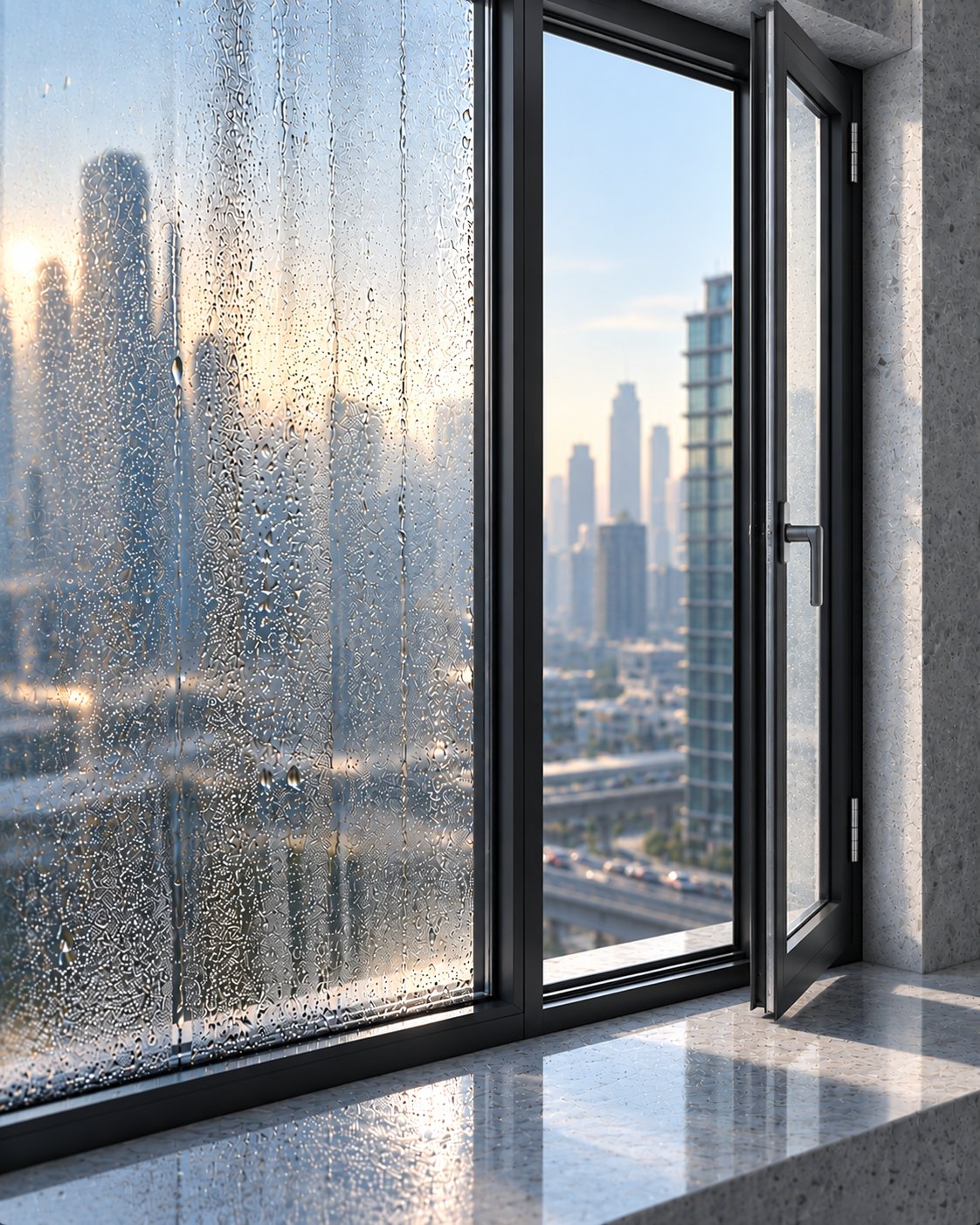
A house can feel fresh and still be poorly ventilated. Cooling and ventilating are different jobs, and most systems do only the first. The proof is carbon dioxide, rising overnight in a closed room.
A bedroom is occupied for eight unbroken hours, and few households think to check it. A child’s room is occupied for longer. So is the room where an elderly parent sleeps.
Humidity governs much of the rest. Too low, and dust stays suspended. Too high, and dust mites and mould thrive. Bathrooms produce the most moisture, and the fan is rarely strong enough to clear it before it reaches the wall behind.
Air fresheners, reed diffusers and scented candles mask the problem and add to it. Some air purifiers generate ozone, itself a regulated pollutant.
Water
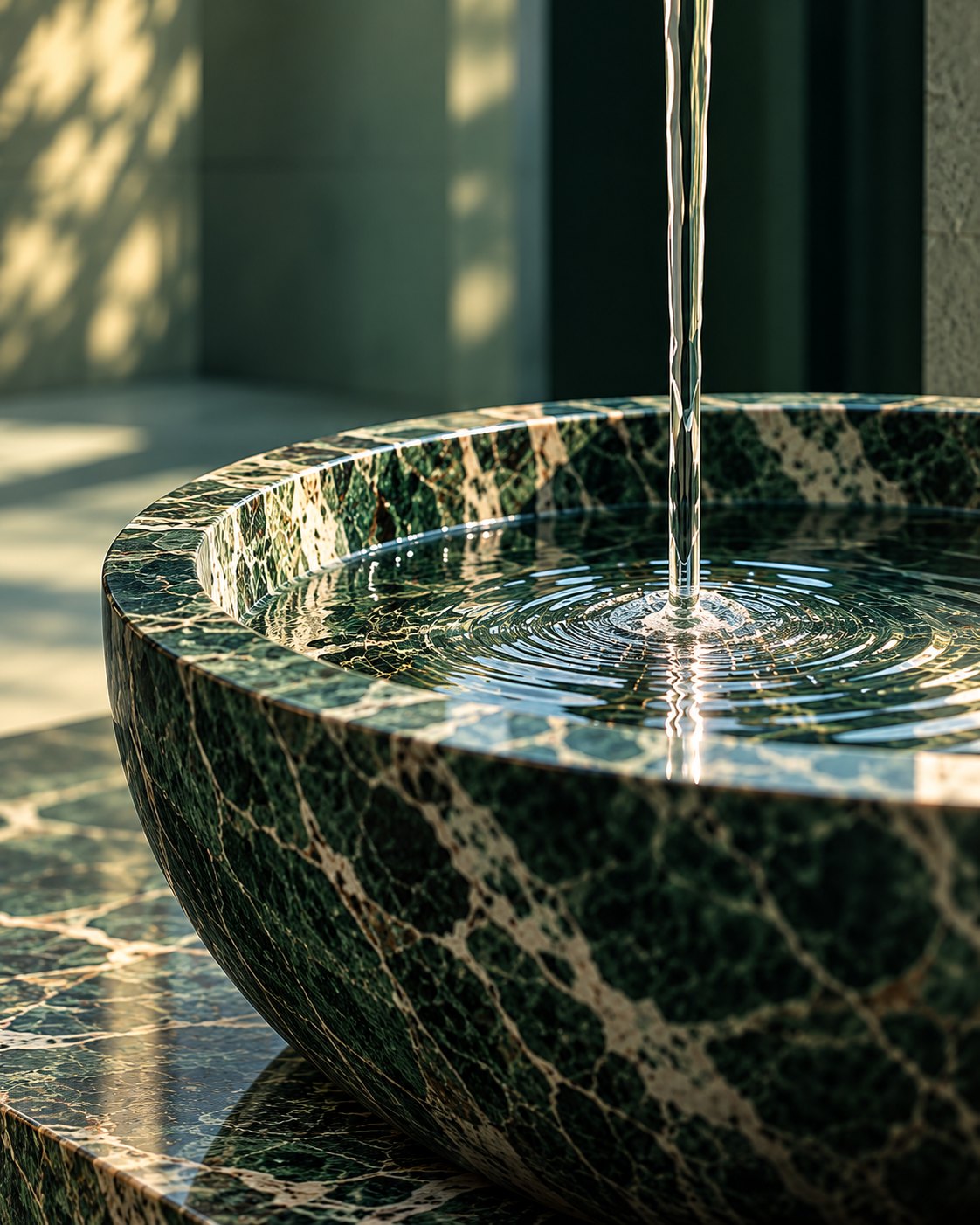
Supply to the building is tested. What happens after that rarely crosses anyone’s mind. Between the mains and the tap sit storage tanks, pipework, softeners and filters, most never opened. Whatever the water picks up on that last stretch reaches the household twice over, through the taps used for drinking and cooking, and through the shower, where heat carries part of it into the air of a closed bathroom. What feeds the shower deserves the same attention as what feeds the tap.
Many families answer the question with bottled water. In 2024, researchers at Columbia University found an average of around 240,000 tiny plastic particles in a single litre of bottled water, most of them nanoplastics.
Others fit a filter. Reverse osmosis removes a great deal, including the minerals water is meant to carry. Unless they are added back, the family drinks water that is clean, and empty. A filter that is never serviced can become part of the problem it was installed to solve.
Warm, still water is where bacteria such as Legionella grow. They are not usually a risk to drink, but to breathe, as fine droplets from a shower.
The cleanest water a family buys is not always the cleanest water it drinks.
Light
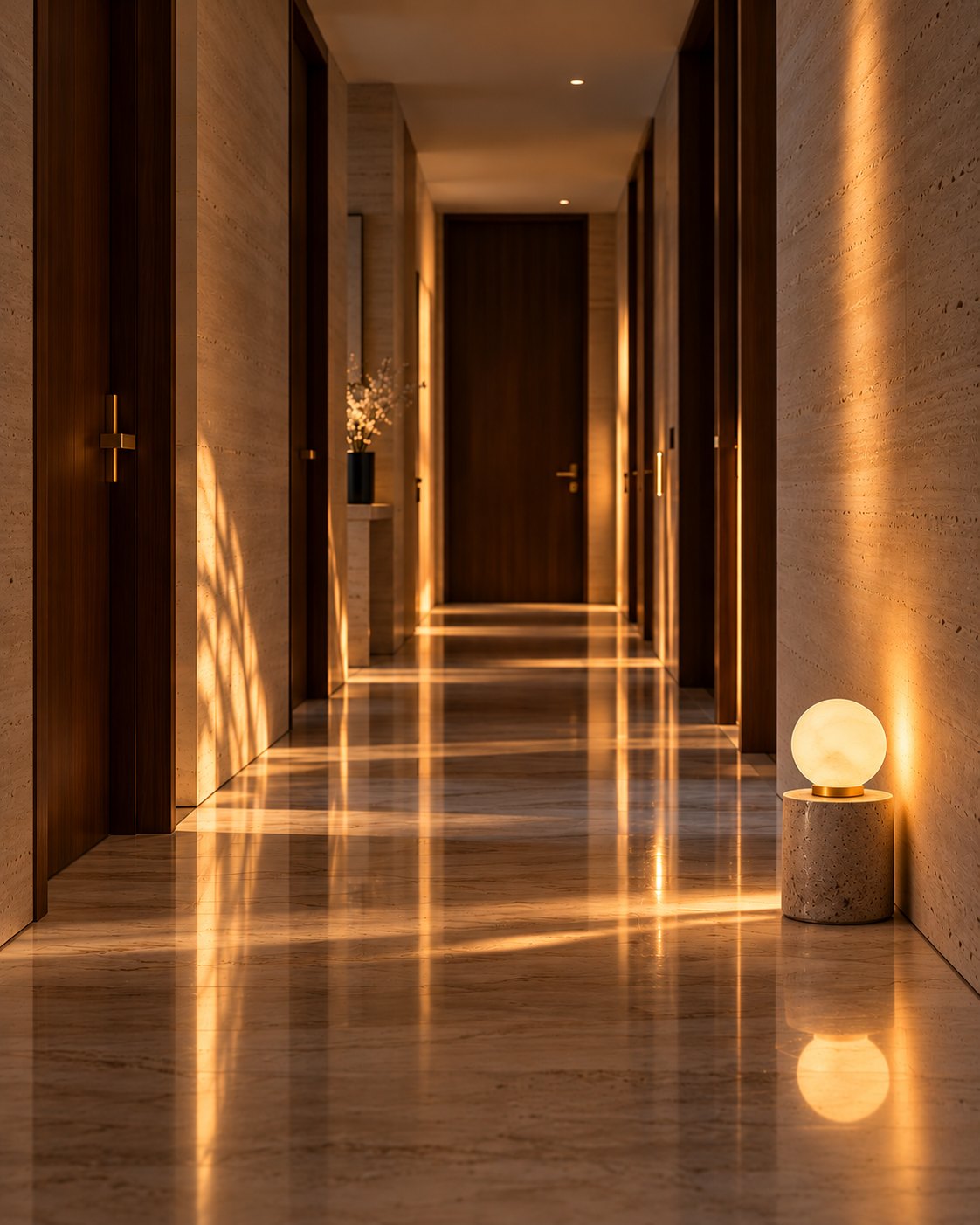
Most lighting is chosen for the room, not for the people in it. Fittings are picked for appearance, one colour temperature is held from morning to midnight, and light levels are set for atmosphere rather than for the desk a child does homework at. Nobody notices, because the room looks bright.
Light sets the body’s clock. Bright daylight in the morning starts the day, and warm, low light in the evening tells the body it is ending. A house lit the same at noon and at midnight gives neither signal.
In the Gulf, daylight is kept out with the heat. Blinds stay drawn, glass is tinted, and for many families the brightest light of the evening is a screen held close to the face before sleep.
A child’s desk, an elderly parent’s staircase and a bedside are three different tasks. Most homes give them the same lamp.
A home can be well lit and still be lit wrongly.

Materials
Paint, cabinetry, flooring and fabric can release formaldehyde and solvents long after the smell has faded. The choice is usually made by a designer or a contractor, on grounds of appearance and price, and the family lives with it for a decade.
Much of what looks like solid wood is pressed board bound with resin. Behind a fine veneer, a wardrobe or a kitchen can go on releasing into the room for years.
Heat speeds it up. In a Gulf summer, a home closed between stays holds everything its materials give off, and the family breathes it on the first night back.
The softest things are often the least known. Foam in sofas and mattresses may carry flame retardants that settle into household dust, at the height where a child plays.
A beautifully finished room and a healthy room are not always the same room.
A house that smells clean and a house with clean air are not the same thing.